Springtime is one of the most beautiful seasons for flowers, and if your wedding is planned for the Los Angeles area between March and the end of May, you’ll have so many gorgeous choices of blooms that you may simply be overwhelmed. Not only will a bounty of flowers be available, many from local Southern California growers, but they’ll be far less expensive than if you had your heart set on them at any other time of year. Achingly lovely pastel tones are the hallmark of many spring flowers, but there are bold colors, too. Alone or in gently matching or vividly contrasting hues, spring flowers make gorgeous bridal bouquets, boutonnières, and centerpieces. No matter what you choose, these spring flowers will make your wedding venue feel fresh and inviting. Here are some of the most popular spring flowers: Anemones Anemones look somewhat like poppies, with striking dark centers often encircled in white. They come in creams, pinks, reds, purples, and shades of blue, and add dramatic contrast to other flowers in a mixed arrangement for a bouquet or a table. Calla Lilies Calla Lilies are the classic, elegantly long-stemmed flowers that generations of brides have carried, often just a few tied with a wide satin ribbon. Most often seen in white, calla lilies also come in very deep purple, burnt orange, bright yellow, orange, and red. Daffodils Daffodils, also called Narcissus, are quite possibly the cheeriest flowers in the world. Symbolizing rebirth and new beginnings, they’re virtually synonymous with spring. Daffodils come in yellow, white, and combinations of yellow, white, and orange, and because they tend to wilt quickly out of water, they’re best used in centerpiece arrangements. Gardenias Gardenias have a swoony fragrance and a definite romantic nature. A bridal bouquet of gardenias in a shade of white or creamy ivory would be gorgeous, and a single gardenia makes a perfect boutonnière. Hydrangeas Hydrangeas are an over-sized bloom made up of massive numbers of small flat petals. They come in white, and shades of pink, blue, purple, and pale green. While a few can be mixed with other flowers in a bouquet, because of their size, hydrangeas are more commonly used in centerpieces. Lilacs Lilacs are the quintessential flower of spring in colder climates, but are now successfully being grown locally. Their large, luscious, and aromatic blooms are composed of multitudes of the tiniest petals and you can find lilacs in pinks, purples, and white. Lisianthus Lisianthus, also known as Texas Bluebell, is the descendent of a native wildflower. They can be single or double-flowered, with several ruffled petal blooms on each stem, and add charm to any bouquet or centerpiece. Lisianthus come in shades of white, pink, lavender, and purple, and in bi-colors like blue-violet. Peonies Peonies are large, lush, and romantic. The traditional floral symbol of China, and a favorite of brides everywhere, some have a single layer of petals, and some have multiple layers that create a rounded bloom. Peonies typically come in white, ivory, and every shade of pink from the palest blush to deep rose. They also come in coral, lavender, and deep burgundy. Even in season, peonies are pricey, so they’re usually used in bouquets rather than in centerpieces. Ranunculus Ranunculus, sometimes known as Buttercups, are small, delicate flowers with whisper-thin petals wound in multiple layers. They come in white, pink, red, yellow, and orange, and are a lovely addition to a bouquet or centerpiece. Ranunculus flowers are famously grown here in Southern California, just over an hour away from Los Angeles in Carlsbad. Roses Roses are available year round, but in springtime, what could be better than a bouquet of homegrown roses in first bloom? Regardless of where they’re grown, though, nothing says true love more eloquently than a rose. Available in endless varieties and a rainbow of colors, from pure white to the deepest shades of red and purple, as well as in combinations of tones, roses are perfect on their own or mixed with other flowers. Sweet Peas Sweet Peas are small, delicate flowers that can evoke a country backyard or be entirely urban in an arrangement of sturdier blooms. They come in one of the widest ranges of colors in the flower world, some solid, and some bi-colored, striped, or swirled. Choices include blues from pale to navy, and multiple shades of red, pink, purple, magenta, and peach, as well as white. The only color they don’t come in is yellow. Tulips Tulips are simple, graceful flowers that lend themselves to the most ornate or modern arrangements. They look beautiful by themselves or mixed with other flowers in a bouquet or centerpiece. Tulips come in pure white and almost every color of the rainbow.
You’ve selected the perfect date, found the perfect venue and caterer, picked a theme, chosen the honorees and speakers, arranged for the entertainment and maybe an auction, and sent the invitations. Now don’t waste a minute of what you’ve probably spent six months or a year planning. Make the evening count! Around the country and in major metropolitan areas like Los Angeles in particular, charity fundraising events go on night and day. People are inundated with invitations from worthy causes, and they have to choose how they want to spend their time and their money. Even if they pick your event this time, you want them to come back next year. The way to do that is to give them an evening that’s comfortable, engaging, and fun. Here are three tips on how to make it happen: 1. Make Guests Feel Welcome Some people will have bought entire tables and given you their guest lists to fill them. They’ll be with friends and you don’t have to worry about whether they’ve found people to talk to. It’s the other guests, the couples and singles, who will enter the room and probably be seated with people they’re never seen before. Maybe you’ve been in that position yourself. You look around the table, smile at people, maybe introduce yourselves, say something about how good the salad looks, and then, dead silence. It’s not like a wedding where people know at least that everyone else is connected in some way to either the bride or groom and can find common ground for conversation. At the typical fundraiser, so much depends on chemistry and personalities; some folks are naturally friendly and some are shy, and you’re in for a long night if you’re at a table of shy ones. Make it easy for your guests by going the extra mile when you’re arranging the seating. Think about what people may have in common, whether it’s the business they’re in, their involvement with your cause or a particular honoree, or something as simple as their general age range. If you don’t know anything about them, do a little research. It will pay off when the individual guests at a table discover that they’re all teachers, for example, or all like to ski. They might think it’s a coincidence that they wound up with such a congenial group and had such a good time, but you’ll know better. 2. Don’t Make Your Message Compete With the Meal Once everyone’s been seated, have a few introductory comments and then let people eat. If the first course has been pre-set at each place, guests will have begun eating anyway, regardless of what’s going on at the microphone. So if you have anything more than a minute or two of welcome, you’ll be competing either with rumbling stomachs or clinking tableware. Either way, your message will be lost. To make the evening move along, groups sometimes show a video during the first course. Your venue will likely have sound and video capabilities you can utilize. This way, you’ve got a captive audience, but try to avoid having the vehicle of your message compete with people pouring wine or passing salad dressing around. If you do have a video, screen it while the table is being cleared and the second course is being served. If you’re having a dinner buffet and people will be getting up for their entrées, save the video until everyone’s seated again. 3. Time Your Program for Maximum Impact During dessert is prime time for the program to start, and here’s the dilemma: which comes first, the presentations or the live auction? Sad to say after all the work you’ve put into planning it, most people will not stay for the entire evening, especially if it goes on much past two hours. If you make the main presentation first — giving your heartfelt pitch and recognizing honorees — people will probably not hang around for the auction. They may even start slipping out the door as soon as the award is given to whichever personal friend of theirs is being honored. Rooms can be half empty even before that part of the program is over unless you do as they do at the Oscars and save the biggest award for last. On the other hand, feeling full and perhaps generous after cocktails and dinner wine, the best audience for a live auction is found during the dessert course. If you keep the action snappy and your auctioneer doesn’t drag out the bidding, you have the best chance of making the auction entertaining even for folks who aren’t buying anything. They’re going to stay at least until their friends are honored, but you don’t want them to feel tortured. You’ve been single-mindedly focused on the event for months, and in your heart believe that everyone who shows up is or should be as committed to the cause as you are. Even if they are, people have so many competing things going on in their lives that what you consider the night of all nights is just another dinner event for most of them. They’ve bought their tickets and contributed to your charity. Reward them by giving them an evening that they will enjoy and remember, and you have a good chance of seeing them again next year.
You’ve just had the most beautiful experience of your life, and you’re full of emotion. Beneath your excitement, you’re probably bone-tired, too, and anxious to take off your shoes and have some quiet time with your new spouse. But before you leave your wedding venue, there are still a few things that need to be taken care of. You don’t have to do them all personally, but you do have to make sure they’re done, either by the best man or maid of honor, by your parents, or by some other trusted soul. 1. Store Your Cake You probably want to save the top tier of your cake, either to freeze and have on your first anniversary, or just to gorge on à deux for the next week or when you come back from your honeymoon. If you were able to eat more than a bite of it during the reception, you’re ahead of the curve. Regardless, considering how much time and effort you put into making sure the cake would be both gorgeous and delicious, you deserve to wallow in its yumminess. If you’ve got a cake-topper, you don’t want it left behind, either. Tell your venue or caterer ahead of time not to slice the top tier, and ask to have it boxed and refrigerated after guests have been served. Then remember to take it with you. If you’re going to freeze the cake, refrigerate it again for a while when you get home so the icing firms up. There might be cardboard underneath the cake; if so, remove and cover the cardboard with aluminum foil and then replace it. Now wrap the cake tightly in two layers of plastic wrap to protect against freezer burn. Even if you don’t have the time to refrigerate the cake first, wrapping it in plastic shouldn’t disturb a smooth fondant coating, although it might mush a softer frosting. But better to have the cake remain edible than perfect. Finally, put the wrapped cake back into the box, wrap the box in foil, and pop it into the freezer. Alternatively to the box, put the wrapped cake into an airtight plastic container that you had the wonderful presence of mind to buy in advance. If someone else is doing all this for you while you head directly off to your honeymoon, try to keep the ultimate transfer time to your own freezer as short as possible. Every time the temperature of the frozen cake drops, it gives ice crystals time to form and affect the texture of the cake. You’ll probably forget this next bit of advice by the time your anniversary rolls around, but we’ll offer it anyway: The day before you want to eat the cake, take it out of the freezer and put it into the refrigerator to defrost, removing the plastic wrap after a couple of hours. Then leave it out for an hour or so before serving so it reaches room temperature. 2. Stow the Gifts Inevitably, some people will bring gifts with them to the wedding. You made sure that they’ve been safely tucked away throughout the evening. Now don’t go home without them! It sounds like a simple thing, but in the crush of saying goodbye to everyone, it might slip your mind. It’s best to designate someone to be responsible for gathering up and transporting the gifts so that nothing goes astray. 3. Save the Decorations If any part of the décor is something you want to save, be sure the venue or your wedding coordinator knows in advance. When an event is over, staff swoops in fast to start cleaning up and tossing things or packing them up for retrieval by the rental house. In any case, you really shouldn’t count on the venue to know the difference between the items that have been rented and those that you’ve brought from home and want to keep. Even things that should be obviously personal, like framed photos, might be inadvertently thrown in with tablecloths that are going to the laundry. You’ll probably get them back, but why go through the hassle? Designate a trustworthy person or two to do a quick sweep of the room as the last guests are leaving. 4. Pay the Bills You’ve already paid most of the bill to the venue and caterer, but there may be additional items that couldn’t be added until the evening was over. Be clear in advance about acceptable forms of payment (check, credit, or debit card), and make sure the responsible party knows he or she has to wait for the final tally before heading home. The same goes for tipping. If you studied our wedding checklist, you prepared tip envelopes in advance and entrusted them to the best man or maid of honor to distribute at the end of the evening. 5. Check the Dress This clearly isn’t something you need to do before you leave your venue, but as soon as possible, carefully check your wedding dress for stains. The faster the dress is in the hands of a reputable dry cleaner, the better the chance is that stains can be removed without harming the fabric.
By admin
February 11, 2015
Your wedding is the surely the most important event you’ve planned in your life until now, and it will certainly rank among the most important you’re ever going to plan. You could rush into it headlong, doing things in the order that they come into your mind, making decisions on the spur of the moment with post-it notes stuck to everything but the dog, and hoping it will all turn out fine, or you could take a little time to learn what you’ve got to do, plan your approach, and sail toward your wedding date in calm control. Getting Started The very first thing to do is determine your wedding budget, because it will influence every other decision you make. If you jump right in without knowing the bottom line, you may wind up wasting thousands of dollars in deposits on things you ultimately find you can’t afford. It isn’t always how much you spend, but how you spend it. Decide your priorities and go from there. Next, choose a wedding planner. Even if you already have a pretty good idea of how you want your wedding to go, a planner will be able to negotiate great deals for you and make everything go smoothly. At the very least, you should consider having a coordinator for the actual day of the wedding to coordinate the fine points and take away some of the stress on the big day. (Some wedding venues provide this service for a fee.) Imagine Your Dream Wedding Now pick a date and a location. This may take some juggling, especially if you’d like to have your ceremony and reception at different locations. You’ll want to pick a beautiful venue that complements your dream day. You may have to compromise to steer clear of major holidays and other major events involving close friends and relatives, but you’ll be happier in the end when all of your nearest and dearest are able to attend your own celebration. Next up is determining your guest list and honor attendants. You will have thought about how large (or small) you’d like your guest list to be when you chose your venue, but now you’ve got to start making decisions. Decide if and how you’re including children and plus-ones, and make that decision known so your guests can make appropriate plans. (While you’re at it, make sure you’ve got everyone’s first and last names spelled correctly, and begin collecting addresses.) You’ve probably been thinking all along about how you’d like your wedding to look and feel, so finalize those thoughts before you go forward so that everything is cohesive. This includes your save-the-dates and invitations, your dress and what everyone else will be wearing, the décor and flowers, the cake, the music, and maybe the menu, too. Nail Down the Specifics Now that you’ve got the look in mind, you can send save-the-dates and design your wedding website. Remember that older relatives may not have access to or be interested in the social network thing; make sure you don’t leave them out of announcements and important information. If your venue doesn’t include catering, don’t wait long before selecting a caterer. You also want to reserve a band or DJ, florist, photographer, and videographer as far in advance as possible. Decide who’s going to make your wedding cake, too. Popular vendors book up fast. It can take many months for a wedding dress to be delivered, so shop for that next. It’s certainly possible to buy a beautiful dress off the rack and have it altered to fit you perfectly, but if you’ve got your heart set on ordering one special gown, allow at least four months for it to arrive, and another few weeks at the least for it to be altered. Your wedding party also needs to be dressed, of course. Delivery of bridesmaid dresses usually takes 2-3 months, and they often have to be altered as well. You also have to order attire for the male contingent; don’t expect to find all the styles and sizes you need to be available at the last minute. Wedding invitations should be mailed at least eight weeks before the big day (with RSVPs due three weeks before the date), so order them with enough time to address them, whether you’re doing it yourself or hiring a calligrapher. Last-Minute Items In the final months before the wedding, order your wedding rings, reserve transportation, book rehearsal and rehearsal dinner locations, test out your wedding hairdo and makeup, order gifts for your bridal party, and find out if your religious service requires any special documents in addition to a marriage license. Don’t apply for that license too far in advance; in California they’re only good for 90 days. A month before the wedding, if you haven’t done it sooner, collect special items you’ll want for the ceremony, write your vows, confirm with all of your vendors, make a day-of schedule and contact list, catch up on thank you notes, and keep on top of RSVPs so you can begin planning the seating chart. The last weeks before the wedding will go by in a blur, with piles of personal stuff to take care of that no one else can plan for you. Just stay calm and organized, and don’t forget to have fun as you keep your eyes on the prize: a memorable wedding celebration that brings family and friends together to send the two of you off into a loving life together. Everything else is just details. See our printable month-by-month wedding checklist: WEDDING PLANNING CHECKLIST
By admin
January 21, 2015
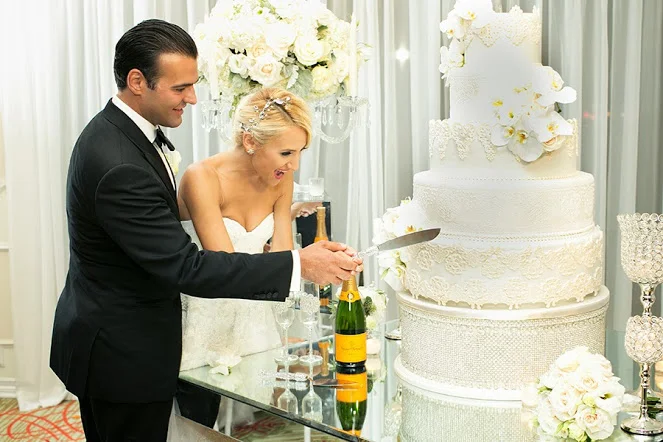
Since the ancient Romans ended wedding ceremonies by breaking a cake of wheat or barley over the bride’s head as a symbol of good fortune, weddings have been celebrated with a special cake. Traditions evolved through the ages, and for the past 150 years or so, a tiered white cake has been the single most iconic wedding image there is. Today’s cakes, though, take many shapes and colors, and choosing one for your wedding is a sweet, but sometimes confusing, task. 1. Book a Baker Early Any wedding planner could tell you that good bakeries in L.A. book up fast, particularly for Saturday weddings in the very popular wedding months of June, September, and October. Do your research by asking for recommendations from your venue, caterer, and friends. You’ve likely been scrolling through Pinterest and making notes on what kind of cakes you like and what styles and colors of decoration would best suit your wedding. Bring photos with you when you interview bakers, and listen to suggestions they offer. Your perfect match will be a baker who’s able to do what you want at a price you can afford. Wedding cakes are priced by the number of guests they can serve as well as how elaborate they are, inside and out. Be prepared to pay anywhere from $4 to $10, and up, per slice. 2. Decide on the Shape A graduated series of round layers is the traditional style, but tiers of square layers have become very popular and lend themselves to a contemporary-style wedding. Other shapes like hexagons and ovals are possible, as are more whimsical shapes that your baker can create from standard geometric forms. 3. Decide on the Icing Once you have decided on the shape of your wedding cake, the next move is to determine the icing you would like, if any. The five most common icings are: Buttercream is made from butter and sugar and flavorings are easily added. It’s rich, smooth, and stays soft, so it can be spread smoothly or piped in latticework, basket weaves, or other patterns. It’s also used to create swags, rosettes, and other decorations, and it can be used as a filling, too. Because it melts in extreme heat or humidity, it’s not a good choice for outdoor weddings. Fondant is made from sugar, corn syrup, and gelatin that’s rolled out and then molded over the cake. It’s the most popular coating for wedding cakes because of its clean, porcelain-like finish. It is also easily molded and is good for draping, but it does not take well to flavorings. For this reason, most bakers will frost the cake in buttercream before adding the fondant as a finishing touch. Ganache is made from chocolate and cream, and is as delicious as it sounds. In its standard form, ganache is poured over the cake for a smooth, glossy finish, but it can also be whipped and applied like buttercream. However, it will melt in the sun and can’t be colored the way other icings can. Marzipan is made from ground almonds, sugar, and egg whites, and can be rolled and draped the same way as fondant. It’s more generally used to mold edible flowers or fruit as cake decorations, but as an icing it’s indescribably more delicious than fondant. The downside is that marzipan is often more expensive. No frosting at all is a growing trend for wedding cakes, and is simple and beautiful when the cake is decorated with fresh fruit and flowers. A naked cake won’t be protected from the effects of air or air conditioning, though, so it’s more likely to dry out if it’s held too long before serving. 4. Decide on the Decorations Your cake can be decorated a multitude of ways, including with piped beading, scrolls, swags, lacework, Swiss dots, flowers, leaves, or other elements made with buttercream or firm-textured royal icing. More detailed and realistic flowers are usually created from gum paste (a combination of sugar, cornstarch, and gelatin) or marzipan that is hand molded and delicately painted or airbrushed. Another technique is pulled sugar, in which air is incorporated into boiled sugar by a process of pulling and folding; it produces shiny, translucent flowers, and bows. Pulled sugar can also be blown like glass, to form bubbles and other unique shapes. Keep in mind that all of this handwork takes time and talent, and for that reason can be quite expensive. An alternative is to have your cake decorated with fresh flowers or a combination of simple piping and fresh blooms. 5. Decide on the Flavor This calls for a tasting, where the baker will set out a tray of cake and filling samples for you to try. Ask ahead to see what the selection will be so you can add to it if you have something specific in mind. Pretty much all wedding cakes used to be vanilla, but that has since changed. You can have a different flavor and color for each tier and go wild with fillings if you want. The outside of your cake is important, of course, but as with people, it’s what’s on the inside that counts!
By admin
December 20, 2014
What’s worth celebrating more than a loving commitment that has lasted through the years? Whether you’re throwing a party for yourselves or hosting one for your parents or another special couple, it should be an event that’s sentimental and filled with reminders of good times. Invite the Guests Once you’ve selected a date and venue, send out the invitations as far in advance as possible so people can plan to be there. With the busy lives most people lead, it would be a shame for someone who has been important in the couple’s lives to miss the party because he or she didn’t have enough notice. Typically, invitations to anniversary parties carry a “no gifts, please” message, but do ask for one thing: request that everyone come up with a written reminiscence about the couple and to include photos if they’ve got them. You can even include a blank card for that purpose in with the invitation, or specify a size of paper you’d prefer that people use. As guests come in, they can post these on a big display for everyone to see, and later you can put them together in an album. For the display, use an oversized corkboard with push pins or a ribbon “clothesline” with colorful clothespins or metallic or plastic paper clamps. Are You Renewing Your Vows? Sometimes, celebrations of major anniversaries include a vow renewal. If that’s what you’re planning, see if you can arrange for the original officiant to conduct it. As an alternative, the couple can simply write and recite their own renewal vows to each other. If members of the original bridal party will be attending, include them in the ceremony. How lovely if the now-grown-up flower girl is there! Whether or not a vow renewal will be included, toasts and spoken reminiscences are an important part of an anniversary party. You are, after all, celebrating a couple’s life together and the special parts other people have played in it. Arrange in advance who will be speaking, but be open to spur of the moment participation; some of the best remarks can come from someone who remembers a story from a different point of view. And don’t forget the champagne. Crowd-Pleasing Entertainment If you have the means to arrange it, a slideshow or video compilation of photos and home movies can be both funny and touching. Five or 10 minutes is all you need; any longer and you risk losing people’s attention. It would be a nice idea, also, to blow up some photos from the original wedding and have them on easels in a place of honor. (Your venue should be able to supply the easels.) Great food and drink are always the centerpiece of a party, but after that, it’s the music. Keep the memories coming by playing music of the wedding era. A 25th wedding anniversary party calls for music of the early 1990s: Madonna, Mariah Carey, Michael Bolton, Billy Joel, Luther Vandross, Aerosmith, and Bon Jovi. A 50th anniversary party calls for music of the mid-1960s: The Beatles, The Rolling Stones, The Supremes, The Righteous Brothers, The Beach Boys, Petula Clark, Four Tops, and The Temptations. The best online lists of the top 100 songs by year going back to 1958 can be found at www.billboard.com/archive/charts. For chart-toppers prior to 1958, Wikipedia has some good lists. Themes and Decorating Should you have a cake? Of course! It doesn’t have to be tiered and decorated like a wedding cake — though that would be fun — but it should be something special. If the couple’s original cake topper is available, by all means use it. Fortunately, the milestone anniversaries lend themselves easily to decorating schemes. Silver (25th), Pearl (30th), Ruby (40th), Sapphire (45th) Golden (50th), Emerald (55th), and Diamond (60th and 75th) anniversaries can be expressed with your linen and tableware choices as well as with other design elements. If you pick a beautiful venue, there’s no need to go overboard carrying out one of these themes, but it’s a good starting point. Make New Memories To capture new memories, do hire a photographer for the evening. Instruct him to get photos of each guest with the anniversary couple not only for the party album, but also to be given to the guests later. It’s surprising to discover how many important people in our lives we don’t have photos of, and these can be a special treasure. And did you know that the White House will send a congratulatory card signed by the President to any citizens celebrating an anniversary of fifty years or more? Send your request at least two months ahead of time through the Constituent Services function of California’s U.S. Senators Barbara Boxer or Dianne Feinstein or through your local Congressperson. You can also send your request directly to: The White House Greetings Office, 1600 Pennsylvania Avenue, Washington, D.C. 20500. L.A. Banquets has a reputation for being one of the top Los Angeles event planners, and we would love to help you plan the special anniversary party you and your loved one deserve.
By admin
December 3, 2014