As soon as you start planning your wedding, you begin to realize that you can’t invite everyone you’ve ever known in your life unless you have limitless budget and space. Even at that, you’re faced with guest lists being thrust at you from all sides. What with your fiancé’s basketball pals, your mother’s extensive clan of cousins, and your future father-in-law’s business associates, it’s starting to feel as if Dodger Stadium wouldn’t be big enough to host your nuptials. Getting back to that imaginary unlimited budget and space, do you really want to have a wedding that’s indistinguishable from closing night at Coachella? Your wedding should be a very special and exclusive celebration of a sacred commitment. You want people there who mean something to you and to whom you mean something. Getting ready to winnow the lists and decide who you want to invite? Follow the guidelines diagrammed on our chart for wedding guest list bliss. Are They Family? First and foremost are family members from both sides. Relations by blood and by marriage should be the first names on your list. The people who knew you when you were little and watched you grow up, the people who love you no matter what. These are the folks, perhaps above all others, who will enjoy seeing you take the next step and who will be hurt if they’re not included. Not that sparing feelings should be the primary reason to invite someone, but as you head into this new phase of your life you do want to start out on the right foot. Inviting immediate family goes without saying. That means grandparents, parents, and siblings and their spouses. Aunts, uncles, and cousins of your generation come next. If you’re inviting children, then nieces, nephews, and maybe young cousins should be on the list. For some large families, these people alone will just about fill your venue. It might mean reconsidering the rest of your list a bit, but think how lucky you are to have such a big circle of family adding their warmth to your day. How far out you stretch the list of family is up to you. In-laws of in-laws? Third cousins? The determining factor should be whether or not you feel close to them. Family trees often don’t tell the whole story. Are They Friends? There’s a difference between friends and acquaintances. For one thing, friends are people who know and love both you and your fiancé, or at least know your partner’s name . If your save-the-date is going to come as a huge surprise, then that person probably isn’t part of your inner circle. But you might have lifelong friends that distance or the exigencies of life have separated you from and yet would still bring special joy to have with you on your wedding day. What about your parents’ friends? Some may be as close to you as relatives, and absolutely belong on the list even if they’ve never met the wonderful person you’re about to marry. Others not so much. This will take some honest conversation with your parents, especially if they’re paying for the wedding. If they’re important to your parents, and there’s otherwise room to include them without bumping your own besties, go ahead and invite them. Are They Co-Workers? This one is easy. If you often hang out outside of work and are involved in each other’s lives, then those co-workers are in the friends category and are absolute invite ‘ems. As long as you don’t make the other people you work with feel excluded, they’ll all understand. The same rule of thumb should apply to people your parents work with. That nice woman in Accounting would probably be shocked to get an invitation anyway. Are They in a Special Category? There might be some people in your life who aren’t the nearest of relatives and aren’t the closest of friends but will add something extra to the occasion. If you can’t imagine your wedding without them, then there’s nothing more to discuss. Especially if they’ll make the occasion more fun or more meaningful to you. It’s one of the most important days in your life, and you should be surrounded by people it will make you happy to share it with.
By admin
September 9, 2015
Summer always feels like the perfect time for a wedding in Los Angeles, and while some old traditions have gone by the wayside in our fast-paced and technology-driven times, good manners are never out of date. All of our wonderful wedding couples have impeccable manners, of course, and would never give their guests advice on how to behave, so we’re going to do it for them. Read on for a guide to being the perfect guest, whether you’ll be attending a lavish wedding in one of our elegant ballrooms or going to a casual reception in someone’s backyard. 1. Respond to the Invitation RSVP means répondez s’il vous plaît which literally translates to “respond if you please,” but there’s really no “if you please” about it. A major part of planning a wedding is knowing how many guests to count on, and it’s imperative that your hosts know if you’re coming or not so they know how much food to order and how to plan the seating. Holding back on your RSVP is just about the meanest thing you can do to someone who’s already in a state of high anxiety. 2. Don’t Ask to Bring Someone Who Hasn’t Been Invited If the invitation says “Mr. and Mrs. Smith,” it doesn’t mean “and your mother-in-law and all the kids.” Wedding couples think long and hard about their guest lists, and budgetary or other constraints have been worked through carefully. If you’ve been invited without a plus-one, and think perhaps your hosts don’t know you’ve recently become engaged or made another serious commitment, you may quietly inform them and see what they say. But if an additional invitation isn’t forthcoming, don’t make a federal case of it. Either plan to go alone, or fill in the reply card to say you’ll be unable to attend, without adding “because you won’t let me bring my new boyfriend.” 3. Dress Appropriately for the Occasion For women, unless the dress code specifies Gatsby, this means wear anything but white. White belongs to the bride. Period. Even if she’s not wearing white, you can’t. End of story. For men, unless the wedding is on a beach in the tropics, this means you need to put on a jacket and tie. A wedding is a joyous but serious occasion and deserves the respect you pay it by looking your best. 4. Don’t Fuss Over Where You’re Seated Arranging guests in compatible groups is a nightmare. Don’t compound the bride’s aggravation by asking to sit with — or not sit with — someone specific. If you find yourself sitting next to someone you don’t know (or don’t adore), make an effort to be friendly. Everyone at the wedding is dear enough to the couple to have been invited, so you’re bound to find common ground for some congenial small talk. It’s a few hours out of your life and your friendly attitude can be a tribute to the happy couple. 5. Eat What You Like and Leave What You Don’t If you have a severe food allergy (peanuts, shellfish, gluten, whatever), absolutely tell your hosts in advance so the caterer can pay special attention to what you’re served. Everyone wants you to enjoy yourself and not get sick! Almost every wedding caterer will have a vegetarian option on hand, so that’s something you can simply ask your waiter for. However, for the most part, if you’re dealing with preferences rather than something that’s going to send you into anaphylactic shock, just pick and choose what you eat without comment. If your current diet won’t allow you to eat anything that’s being served, smile at the bartender and make a meal of martini olives. You can eat when you get home. 6. Send Your Gift Before or After the Wedding It’s always nice to receive a present, but the bride and groom will have plenty else to do without worrying about where to keep gifts so that they’re safe, and loading them up to take home when the reception is over, much less figuring out who brought what if cards get lost in the shuffle. It’s much more thoughtful to have your present sent to the couple directly from the store either before or after the wedding. 7. Do Not, Do Not, Do Not, Tweet the Wedding You may be used to updating the immediate world about every waking moment of your life, but a wedding is a private event and it belongs to the bride and groom. Don’t steal their thunder by broadcasting the intimate details before they’ve had a chance to do it themselves. The same rule applies to Facebook and all other forms of social media. Unless the wedding couple has specifically instructed people to spread a running review and photos of their big day all over the internet, keep your phone out of sight. In fact, turn it off, or to avoid temptation completely, leave it in the car. Now go forth and be the perfect wedding guest. But naturally, you were going to do that anyway.
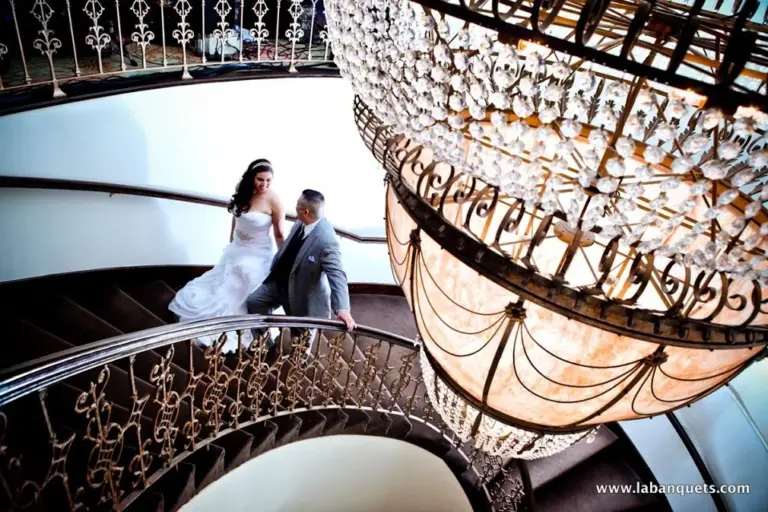
Since at least Victorian times of the 1800s, it’s been traditional for Western brides to incorporate four tokens of good luck into their wedding attire: something old, something new, something borrowed, and something blue. You’ve heard the rhyme since childhood but probably didn’t know the reason for any of it. The tradition is still widely practiced here in Los Angeles, no matter how modern the rest of the wedding. Once you’ve chosen your beautiful wedding venue and start planning your big day, you’ll probably feel like you need all the luck you can get. Read on to learn the history of this good luck tradition and a variety of ways to spin it. Something Old This is a symbol of continuity and a beautiful representation of the link you have with the generations that have preceded you. Perfect examples are an heirloom veil, your mother’s pearls, a cherished piece of jewelry that belonged to your grandmother, or even something that’s been handed down in your husband-to-be’s family. Wearing it provides you with a connection to the people who came before you and contributed not only to the family you belong to today but also to the one you’re going to create with your marriage. Sentiment aside, if your “something old” doesn’t go with your dress, you can still carry it. A brooch can be pinned to the ribbon wrapping your bouquet, or the bouquet itself can be wrapped with a piece of vintage lace or an heirloom handkerchief. The item needn’t be from a female member of the family, either. Your great-grandfather’s stick pin or a military medal can replace or even be pinned next to that antique brooch. And if that won’t work, you can have whatever item it is basted onto the inside of your dress at the hem; no one needs to know it’s there but you. Another way to hold a family remembrance close is to wear a locket with a cherished photo in it; and again, if you’d rather not wear it around your neck, you can pin it to your bouquet’s ribbon or inside your dress near your heart. Something New This represents optimism for a bright future, and many brides consider that their wedding dresses themselves are the something new. Even if your dress is vintage, you’ll surely have new shoes or some other bit of attire that’s new for the occasion. Your wedding ring, for example. When you think about it, though, you really don’t need a “something new” token to express hopes for a bright future. The very act of getting married says it all right there! Something Borrowed This symbolizes borrowed happiness and the notion that friends and family will be there to support your new marriage. Traditionally, the idea is to borrow something from someone who is happily married, to express carrying that happiness into your own new marriage. These days, something borrowed from a single friend will do just fine. Plus it’s your chance to wear a pair of earrings, for example, that you’ve always admired. Just remember to return it (with thanks) after the wedding to symbolize the circle of support you’re offering back to the person you borrowed it from. Something Blue Dating much farther back than Queen Victoria’s time, in fact to ancient Rome, the color blue has been a symbol of faithfulness, purity, and loyalty. It’s also been known as a symbol of the Virgin Mary. Blue is the color of the sky and a clear mountain lake. It’s serene, calm, and overwhelmingly the favorite color of both men and women. Whether you choose baby blue, turquoise, lapis, sapphire, azure, or cobalt, you can incorporate the color into your wedding with a blue garter, a blue flower, one blue bead tucked among the others decorating your belt, or a tiny bow of blue satin ribbon sewn inside your dress. Some brides today are even wearing pale blue wedding gowns, and many are wearing blue shoes. And Finally After advising something old, something new, something borrowed, and something blue, the old English rhyme concludes with “and a silver sixpence in her shoe.” While American brides don’t usually follow this tradition, it’s a nice, authentic touch. The sixpence, a small silver coin first minted in 1551 and part of English currency until about fifty years ago, was included in the symbolic list as a token of good fortune and prosperity. It might be uncomfortable in your shoe, though, so if you can find an old sixpence — or would rather substitute one of our own shiny pennies — let your groom slip it into his pocket. Regardless of whether or not you decide to include any or all of these charming good luck symbols, we wish you a beautiful wedding day and a long and happy marriage!
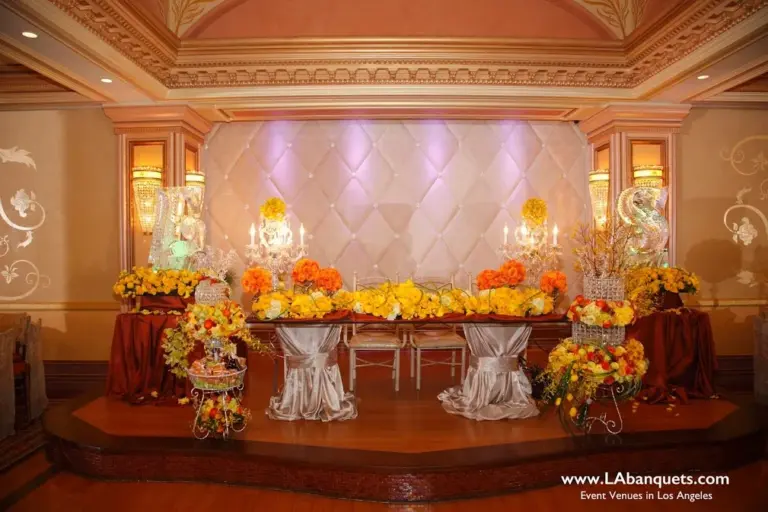
Springtime is one of the most beautiful seasons for flowers, and if your wedding is planned for the Los Angeles area between March and the end of May, you’ll have so many gorgeous choices of blooms that you may simply be overwhelmed. Not only will a bounty of flowers be available, many from local Southern California growers, but they’ll be far less expensive than if you had your heart set on them at any other time of year. Achingly lovely pastel tones are the hallmark of many spring flowers, but there are bold colors, too. Alone or in gently matching or vividly contrasting hues, spring flowers make gorgeous bridal bouquets, boutonnières, and centerpieces. No matter what you choose, these spring flowers will make your wedding venue feel fresh and inviting. Here are some of the most popular spring flowers: Anemones Anemones look somewhat like poppies, with striking dark centers often encircled in white. They come in creams, pinks, reds, purples, and shades of blue, and add dramatic contrast to other flowers in a mixed arrangement for a bouquet or a table. Calla Lilies Calla Lilies are the classic, elegantly long-stemmed flowers that generations of brides have carried, often just a few tied with a wide satin ribbon. Most often seen in white, calla lilies also come in very deep purple, burnt orange, bright yellow, orange, and red. Daffodils Daffodils, also called Narcissus, are quite possibly the cheeriest flowers in the world. Symbolizing rebirth and new beginnings, they’re virtually synonymous with spring. Daffodils come in yellow, white, and combinations of yellow, white, and orange, and because they tend to wilt quickly out of water, they’re best used in centerpiece arrangements. Gardenias Gardenias have a swoony fragrance and a definite romantic nature. A bridal bouquet of gardenias in a shade of white or creamy ivory would be gorgeous, and a single gardenia makes a perfect boutonnière. Hydrangeas Hydrangeas are an over-sized bloom made up of massive numbers of small flat petals. They come in white, and shades of pink, blue, purple, and pale green. While a few can be mixed with other flowers in a bouquet, because of their size, hydrangeas are more commonly used in centerpieces. Lilacs Lilacs are the quintessential flower of spring in colder climates, but are now successfully being grown locally. Their large, luscious, and aromatic blooms are composed of multitudes of the tiniest petals and you can find lilacs in pinks, purples, and white. Lisianthus Lisianthus, also known as Texas Bluebell, is the descendent of a native wildflower. They can be single or double-flowered, with several ruffled petal blooms on each stem, and add charm to any bouquet or centerpiece. Lisianthus come in shades of white, pink, lavender, and purple, and in bi-colors like blue-violet. Peonies Peonies are large, lush, and romantic. The traditional floral symbol of China, and a favorite of brides everywhere, some have a single layer of petals, and some have multiple layers that create a rounded bloom. Peonies typically come in white, ivory, and every shade of pink from the palest blush to deep rose. They also come in coral, lavender, and deep burgundy. Even in season, peonies are pricey, so they’re usually used in bouquets rather than in centerpieces. Ranunculus Ranunculus, sometimes known as Buttercups, are small, delicate flowers with whisper-thin petals wound in multiple layers. They come in white, pink, red, yellow, and orange, and are a lovely addition to a bouquet or centerpiece. Ranunculus flowers are famously grown here in Southern California, just over an hour away from Los Angeles in Carlsbad. Roses Roses are available year round, but in springtime, what could be better than a bouquet of homegrown roses in first bloom? Regardless of where they’re grown, though, nothing says true love more eloquently than a rose. Available in endless varieties and a rainbow of colors, from pure white to the deepest shades of red and purple, as well as in combinations of tones, roses are perfect on their own or mixed with other flowers. Sweet Peas Sweet Peas are small, delicate flowers that can evoke a country backyard or be entirely urban in an arrangement of sturdier blooms. They come in one of the widest ranges of colors in the flower world, some solid, and some bi-colored, striped, or swirled. Choices include blues from pale to navy, and multiple shades of red, pink, purple, magenta, and peach, as well as white. The only color they don’t come in is yellow. Tulips Tulips are simple, graceful flowers that lend themselves to the most ornate or modern arrangements. They look beautiful by themselves or mixed with other flowers in a bouquet or centerpiece. Tulips come in pure white and almost every color of the rainbow.
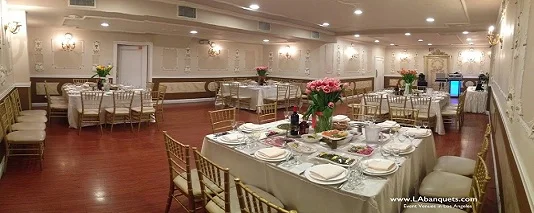
You’ve selected the perfect date, found the perfect venue and caterer, picked a theme, chosen the honorees and speakers, arranged for the entertainment and maybe an auction, and sent the invitations. Now don’t waste a minute of what you’ve probably spent six months or a year planning. Make the evening count! Around the country and in major metropolitan areas like Los Angeles in particular, charity fundraising events go on night and day. People are inundated with invitations from worthy causes, and they have to choose how they want to spend their time and their money. Even if they pick your event this time, you want them to come back next year. The way to do that is to give them an evening that’s comfortable, engaging, and fun. Here are three tips on how to make it happen: 1. Make Guests Feel Welcome Some people will have bought entire tables and given you their guest lists to fill them. They’ll be with friends and you don’t have to worry about whether they’ve found people to talk to. It’s the other guests, the couples and singles, who will enter the room and probably be seated with people they’re never seen before. Maybe you’ve been in that position yourself. You look around the table, smile at people, maybe introduce yourselves, say something about how good the salad looks, and then, dead silence. It’s not like a wedding where people know at least that everyone else is connected in some way to either the bride or groom and can find common ground for conversation. At the typical fundraiser, so much depends on chemistry and personalities; some folks are naturally friendly and some are shy, and you’re in for a long night if you’re at a table of shy ones. Make it easy for your guests by going the extra mile when you’re arranging the seating. Think about what people may have in common, whether it’s the business they’re in, their involvement with your cause or a particular honoree, or something as simple as their general age range. If you don’t know anything about them, do a little research. It will pay off when the individual guests at a table discover that they’re all teachers, for example, or all like to ski. They might think it’s a coincidence that they wound up with such a congenial group and had such a good time, but you’ll know better. 2. Don’t Make Your Message Compete With the Meal Once everyone’s been seated, have a few introductory comments and then let people eat. If the first course has been pre-set at each place, guests will have begun eating anyway, regardless of what’s going on at the microphone. So if you have anything more than a minute or two of welcome, you’ll be competing either with rumbling stomachs or clinking tableware. Either way, your message will be lost. To make the evening move along, groups sometimes show a video during the first course. Your venue will likely have sound and video capabilities you can utilize. This way, you’ve got a captive audience, but try to avoid having the vehicle of your message compete with people pouring wine or passing salad dressing around. If you do have a video, screen it while the table is being cleared and the second course is being served. If you’re having a dinner buffet and people will be getting up for their entrées, save the video until everyone’s seated again. 3. Time Your Program for Maximum Impact During dessert is prime time for the program to start, and here’s the dilemma: which comes first, the presentations or the live auction? Sad to say after all the work you’ve put into planning it, most people will not stay for the entire evening, especially if it goes on much past two hours. If you make the main presentation first — giving your heartfelt pitch and recognizing honorees — people will probably not hang around for the auction. They may even start slipping out the door as soon as the award is given to whichever personal friend of theirs is being honored. Rooms can be half empty even before that part of the program is over unless you do as they do at the Oscars and save the biggest award for last. On the other hand, feeling full and perhaps generous after cocktails and dinner wine, the best audience for a live auction is found during the dessert course. If you keep the action snappy and your auctioneer doesn’t drag out the bidding, you have the best chance of making the auction entertaining even for folks who aren’t buying anything. They’re going to stay at least until their friends are honored, but you don’t want them to feel tortured. You’ve been single-mindedly focused on the event for months, and in your heart believe that everyone who shows up is or should be as committed to the cause as you are. Even if they are, people have so many competing things going on in their lives that what you consider the night of all nights is just another dinner event for most of them. They’ve bought their tickets and contributed to your charity. Reward them by giving them an evening that they will enjoy and remember, and you have a good chance of seeing them again next year.
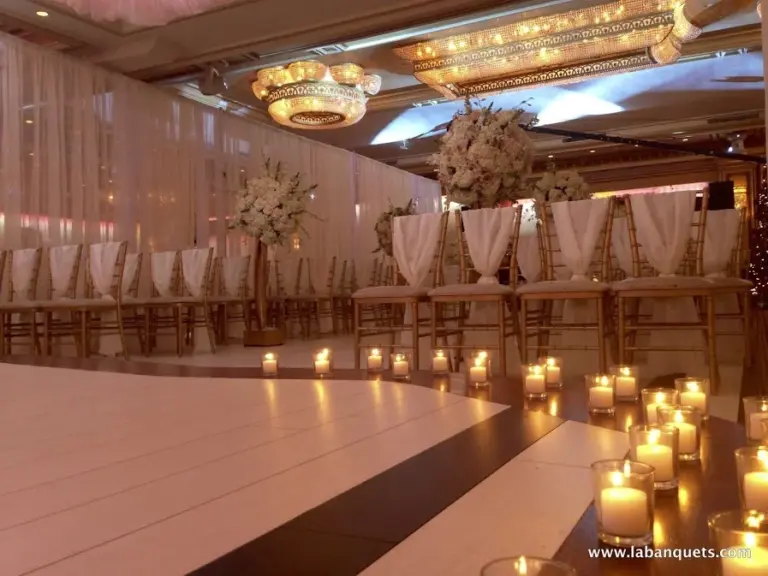
You’ve just had the most beautiful experience of your life, and you’re full of emotion. Beneath your excitement, you’re probably bone-tired, too, and anxious to take off your shoes and have some quiet time with your new spouse. But before you leave your wedding venue, there are still a few things that need to be taken care of. You don’t have to do them all personally, but you do have to make sure they’re done, either by the best man or maid of honor, by your parents, or by some other trusted soul. 1. Store Your Cake You probably want to save the top tier of your cake, either to freeze and have on your first anniversary, or just to gorge on à deux for the next week or when you come back from your honeymoon. If you were able to eat more than a bite of it during the reception, you’re ahead of the curve. Regardless, considering how much time and effort you put into making sure the cake would be both gorgeous and delicious, you deserve to wallow in its yumminess. If you’ve got a cake-topper, you don’t want it left behind, either. Tell your venue or caterer ahead of time not to slice the top tier, and ask to have it boxed and refrigerated after guests have been served. Then remember to take it with you. If you’re going to freeze the cake, refrigerate it again for a while when you get home so the icing firms up. There might be cardboard underneath the cake; if so, remove and cover the cardboard with aluminum foil and then replace it. Now wrap the cake tightly in two layers of plastic wrap to protect against freezer burn. Even if you don’t have the time to refrigerate the cake first, wrapping it in plastic shouldn’t disturb a smooth fondant coating, although it might mush a softer frosting. But better to have the cake remain edible than perfect. Finally, put the wrapped cake back into the box, wrap the box in foil, and pop it into the freezer. Alternatively to the box, put the wrapped cake into an airtight plastic container that you had the wonderful presence of mind to buy in advance. If someone else is doing all this for you while you head directly off to your honeymoon, try to keep the ultimate transfer time to your own freezer as short as possible. Every time the temperature of the frozen cake drops, it gives ice crystals time to form and affect the texture of the cake. You’ll probably forget this next bit of advice by the time your anniversary rolls around, but we’ll offer it anyway: The day before you want to eat the cake, take it out of the freezer and put it into the refrigerator to defrost, removing the plastic wrap after a couple of hours. Then leave it out for an hour or so before serving so it reaches room temperature. 2. Stow the Gifts Inevitably, some people will bring gifts with them to the wedding. You made sure that they’ve been safely tucked away throughout the evening. Now don’t go home without them! It sounds like a simple thing, but in the crush of saying goodbye to everyone, it might slip your mind. It’s best to designate someone to be responsible for gathering up and transporting the gifts so that nothing goes astray. 3. Save the Decorations If any part of the décor is something you want to save, be sure the venue or your wedding coordinator knows in advance. When an event is over, staff swoops in fast to start cleaning up and tossing things or packing them up for retrieval by the rental house. In any case, you really shouldn’t count on the venue to know the difference between the items that have been rented and those that you’ve brought from home and want to keep. Even things that should be obviously personal, like framed photos, might be inadvertently thrown in with tablecloths that are going to the laundry. You’ll probably get them back, but why go through the hassle? Designate a trustworthy person or two to do a quick sweep of the room as the last guests are leaving. 4. Pay the Bills You’ve already paid most of the bill to the venue and caterer, but there may be additional items that couldn’t be added until the evening was over. Be clear in advance about acceptable forms of payment (check, credit, or debit card), and make sure the responsible party knows he or she has to wait for the final tally before heading home. The same goes for tipping. If you studied our wedding checklist, you prepared tip envelopes in advance and entrusted them to the best man or maid of honor to distribute at the end of the evening. 5. Check the Dress This clearly isn’t something you need to do before you leave your venue, but as soon as possible, carefully check your wedding dress for stains. The faster the dress is in the hands of a reputable dry cleaner, the better the chance is that stains can be removed without harming the fabric.
By admin
February 11, 2015